


When Do Alloy Wheels Need Welding? Key Signs
A wheel can look almost perfect from the outside and still lose air every few days. That is often when drivers start asking, “when do alloy wheels need welding?” The answer is simple: welding may be needed when an alloy wheel has cracked, but only after a proper inspection confirms that the damage can be repaired safely. A quality weld can save you the cost of replacing an otherwise good wheel. The wrong repair, or no repair at all, can lead to recurring tyre-pressure loss, vibration and bigger problems on the road.
When Do Alloy Wheels Need Welding?
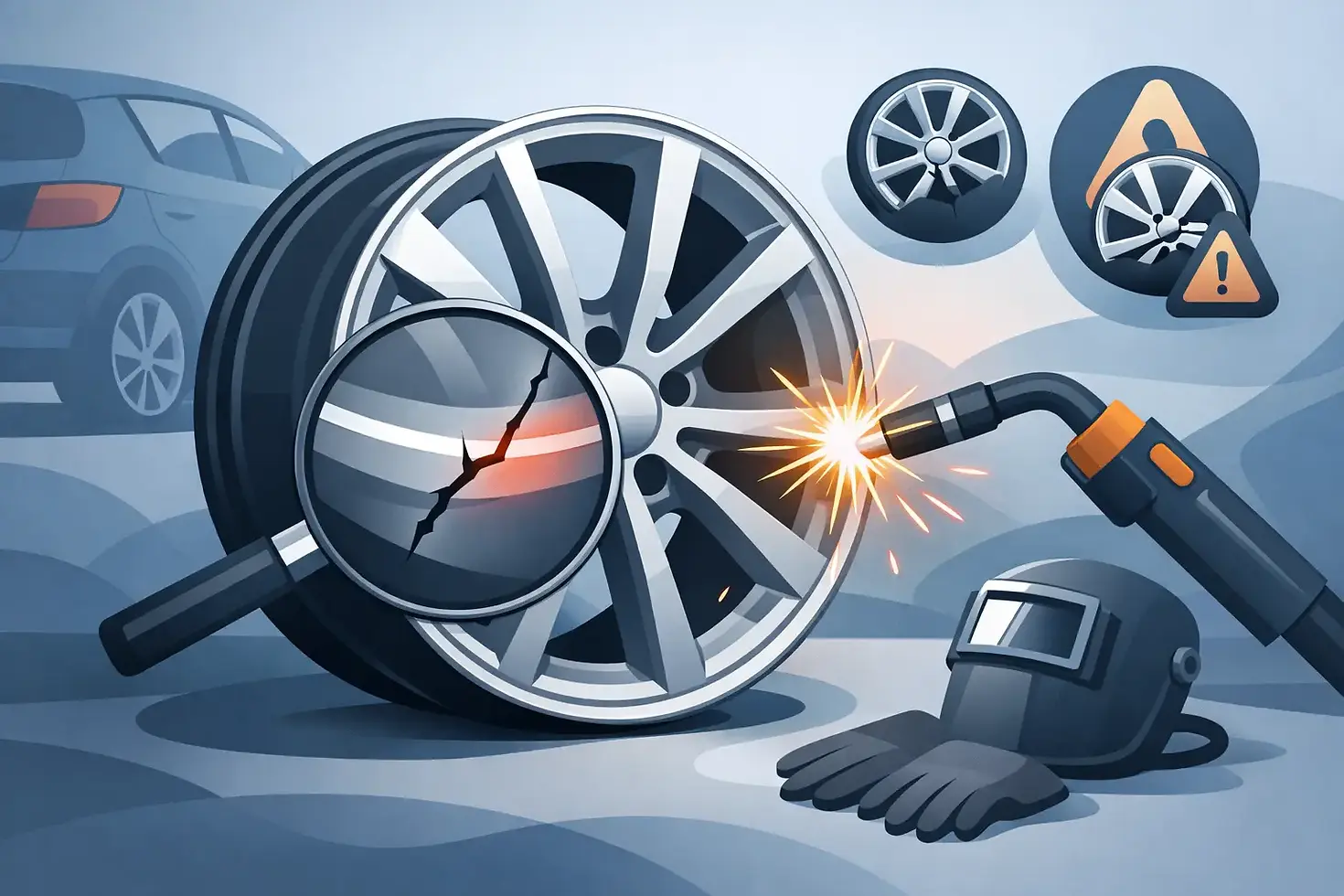
Alloy wheel welding is used to repair a crack in the metal of the wheel. It is not a cosmetic fix for kerb rash, peeling lacquer or light corrosion. Those issues normally call for refurbishment, powder coating or diamond cutting. Welding is a structural repair for damage that has broken through the alloy itself.
Cracks are most commonly caused by potholes, raised drain covers, sharp kerbs and hard impacts. Low-profile tyres offer less protection from these knocks, so wheels on modern cars can be particularly vulnerable. A crack may appear on the inner barrel, where it is difficult to spot without removing the wheel, or around the rim area after a heavy strike.
The most common sign is a tyre that keeps losing pressure despite having no obvious puncture. You may inflate it, drive for a few days, then find the warning light returns. If the tyre, valve and bead seal check out, a cracked wheel is a likely cause.
Other warning signs include vibration through the steering wheel, a noticeable wobble at speed, a visible hairline crack, or a clicking noise from the wheel area. Do not assume every vibration means a crack - tyres, balancing and bent wheels can produce similar symptoms. That is why inspection matters before any work begins.
A Crack Is Not Always an Automatic Replacement
Whether a wheel can be welded depends on where the crack is, how large it is and the wheel's overall condition. A clean, localised crack in a suitable area can often be professionally repaired, tested and returned to service. This can be a far better-value option than buying a new genuine wheel, especially on premium vehicles or when a matching replacement is hard to source.
However, not all damaged wheels should be repaired. A wheel with multiple cracks, severe distortion, extensive corrosion, previous poor welds or damage around critical structural areas may need replacing. The same applies where the impact has caused significant weakness or the wheel cannot be straightened to run true.
A reputable specialist will tell you plainly if welding is not the right answer. Saving money matters, but a repair only makes sense when it delivers a safe, dependable result. No driver should be sold a quick fix for a wheel that ought to come off the car.
The position of the crack matters
Cracks around the inner rim or barrel are frequently identified during tyre removal and inspection. Depending on their size and position, these may be suitable for welding. Cracks near the spoke area, hub mounting face or other highly stressed sections require particularly careful assessment and may not be viable for repair.
Do not judge a crack from a photograph alone. What looks like a fine surface line can extend further through the metal, while a wheel that seems sound may also be bent. Proper diagnosis requires the wheel to be cleaned, examined and checked for leaks and run-out.
Why Ignoring a Cracked Alloy Wheel Costs More
A small crack rarely improves with use. Every pothole, kerb strike and heat cycle from braking puts the damaged area under more stress. What begins as a slow leak can become a larger split, leaving you with a flat tyre at the roadside and a wheel that is beyond economical repair.
Driving with low tyre pressure also affects handling, braking and tyre wear. It can damage the tyre sidewall and reduce fuel economy. If you are repeatedly topping up one tyre, do not keep treating the air as the problem. Find the source.
There is also a false economy in using sealants as a permanent answer. They may temporarily reduce a slow leak in some circumstances, but they do not restore cracked alloy. They can make a proper repair messier and delay the inspection your wheel needs.
What Professional Alloy Wheel Welding Involves
A proper wheel welding job is more than running a bead across a visible crack. The tyre is removed so the whole wheel can be inspected, including the inner barrel. The damaged area is prepared correctly, and the crack is welded using the appropriate process and materials for alloy wheel repair.
After welding, the repair area is finished, checked and tested for air leaks. If the impact has also bent the wheel, wheel straightening may be required before it goes back on the vehicle. The wheel should then be balanced once the tyre is refitted. Skipping any of these stages can leave you with a wheel that still vibrates, leaks or looks poorly finished.
If the wheel has cosmetic damage too, welding can be combined with refurbishment. Powder coating gives a durable painted finish, while diamond cutting restores the bright machined face found on many modern alloys. Combining work while the wheel is already off the car can save time and avoid paying for separate strip-downs later.
At Uniten Partners Ltd, wheel welding is assessed as part of the complete condition of the wheel, not treated as a one-size-fits-all repair. The aim is straightforward: restore a repairable wheel properly, or give you an honest answer when replacement is the safer option.
Welding, Straightening or Refurbishment: Which Repair Do You Need?
These services solve different problems, although impact damage often creates more than one. Welding repairs cracks. Straightening corrects bends and buckles that cause run-out or vibration. Refurbishment addresses scratched paint, corrosion, kerb damage and tired-looking finishes.
For example, a driver who hits a deep pothole may end up with a cracked inner barrel and a slight buckle. Welding alone may stop the air leak, but it will not necessarily cure the vibration. The wheel should be assessed for both issues. On the other hand, a scuffed wheel that holds pressure and runs true does not need welding at all - a cosmetic refurbishment is the sensible route.
This is why price comparisons should be based on the work actually required, not just the cheapest advertised repair. A low-cost cosmetic touch-up will not fix a structural fault, and a replacement wheel may be unnecessary if a specialist can safely restore yours.
What to Do If You Suspect a Cracked Wheel
If one tyre is losing pressure regularly, check it promptly. Avoid high-speed driving or long journeys until the wheel has been inspected, particularly if the pressure loss is rapid, the steering feels unsettled or you can see damage. Do not try to weld, fill or grind the crack yourself. Alloy wheel repairs require the right equipment, preparation and safety checks.
When booking an inspection, explain what happened and what symptoms you have noticed. Mention any pothole strike, kerb impact, tyre-pressure warning or vibration. This helps the technician focus on likely damage and identify whether the wheel needs welding, straightening, tyre work or a combination of repairs.
Can a welded alloy wheel be used normally?
A professionally assessed and correctly repaired wheel can be returned to normal use where the damage is suitable for welding. The key words are professionally assessed. The repair must be appropriate for the crack location and the wheel must be checked thoroughly afterwards.
Will wheel welding remove a vibration?
Only if the vibration is caused by the crack or related wheel damage. A buckle may need straightening, while tyre imbalance, worn suspension components and tyre defects can also cause vibration. Inspection prevents you paying for work that does not address the real fault.
How quickly should a cracked alloy be repaired?
As soon as practical. A slow leak may seem manageable, but it can worsen without warning. Early inspection gives you the best chance of a cost-effective repair and reduces the risk of damaging the tyre as well.
A cracked wheel is not a problem to guess at or put off until the next service. Get it checked while the damage is still manageable, and you could save the wheel, protect your tyres and get back on the road with confidence.


Comments