


Pothole Wheel Repair Case Study for Damaged Alloys
A pothole can turn a normal drive through Suffolk into an expensive problem in one sharp impact. The tyre may look fine at first glance, but a hard strike can leave an alloy wheel bent, cracked, kerbed or badly scuffed. This pothole wheel repair case study follows a typical repair route for a driver who wanted a safe, smart result without paying to replace a full set of wheels.
The lesson is simple: do not judge pothole damage by appearance alone. A wheel can still hold air while being out of shape, and that can affect ride quality, tyre wear and confidence behind the wheel.
The problem: one pothole, several warning signs
The vehicle arrived after hitting a deep pothole on a rural road. The driver noticed an immediate vibration through the steering wheel at speed, followed by a slow loss of tyre pressure over the next few days. The front alloy also had fresh marks around the outer rim.
This is a familiar pattern. The impact had pushed the wheel against the tyre with enough force to distort the rim. From the outside, the damage looked like a minor kerb mark. On inspection, the inner barrel showed a bend and a small crack near the rim edge.
Replacing the alloy was one option. However, it was a factory-fitted wheel with a matching finish, and sourcing one in the same condition would have been costly. A cheap used replacement can bring its own issues: hidden repairs, corrosion, poor condition or a finish that does not match the other three wheels.
For this driver, professional repair was the more sensible route - provided the wheel could be restored safely.
Pothole wheel repair case study: the inspection
A proper inspection comes before any promise to repair. The wheel was removed, the tyre was taken off and the alloy was cleaned so the full extent of the damage could be assessed. This matters because cracks and bends are often hidden behind the tyre bead, brake dust or road grime.
The inspection focused on three areas: whether the wheel was structurally suitable for repair, how far the rim had moved out of true, and whether the tyre had suffered damage at the same time. A pothole impact can cause a tyre sidewall bulge or internal damage, so the tyre should never be ignored simply because it remains inflated.
In this case, the crack was localised and repairable. The wheel had not been severely distorted, there was no damage around the bolt holes or centre bore, and the alloy had enough sound material around the affected area. That made a specialist repair viable.
There are occasions when replacement is the right answer. A wheel with extensive cracking, serious deformation, repeated poor repairs or damage in a critical area may not be a sensible candidate. A trustworthy wheel specialist will tell you that directly. Saving money is only worthwhile when safety is protected.
The repair: restoring the wheel, not hiding the damage
The first structural task was wheel straightening. Using specialist equipment, the bent section of the rim was carefully brought back into shape. The aim is to restore a true running surface so the tyre can seat correctly and the wheel rotates as it should.
This is not a job for a hammer, a driveway and guesswork. Poorly attempted straightening can weaken the alloy or leave the wheel with a run-out that still causes vibration. Correct measuring and controlled pressure are what separate a lasting repair from a temporary fix.
Once the wheel was true, the crack was prepared and welded by a specialist. The damaged section was cleaned back, repaired properly and finished so it could be inspected before cosmetic work began. Welding is a structural process, not simply a way to make a crack disappear under paint.
After the straightening and welding, the wheel was checked again. Only when it met the required standard was it ready for refurbishment.
Why the finish matters after a pothole strike
Pothole damage rarely leaves just one problem. The impact can chip the lacquer, expose bare alloy and create marks where moisture can get underneath the coating. Left untreated, this can lead to corrosion and lifting paint around the damaged area.
For this wheel, the old finish was removed and the alloy was prepared for a durable new coating. The chosen finish was matched to the existing wheels as closely as possible, giving the customer a clean, factory-style appearance rather than an obvious patch repair.
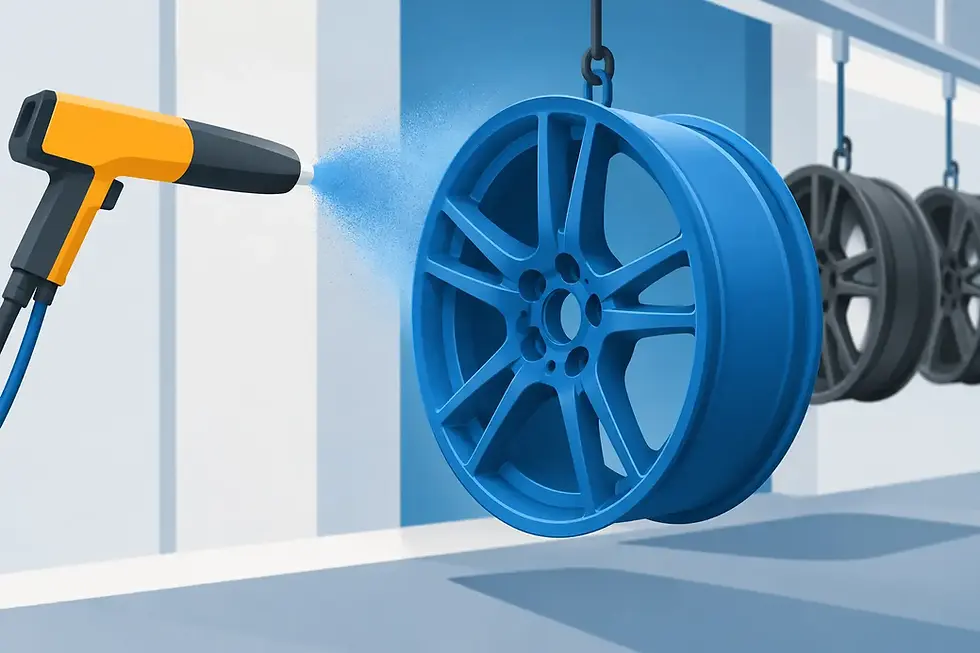
Powder coating is a strong option for many alloy wheel refurbishments because it provides a durable, even finish. The right choice depends on the wheel design and original appearance. Diamond-cut alloys, for example, need a different process to recreate their machined face and lacquered finish. The best repair is the one that suits the wheel, not the fastest one available.
The result: smoother driving and a wheel that looks right
After repair and refinishing, the wheel was refitted with the tyre checked for suitability. The vehicle was then balanced to help eliminate the steering vibration caused by the impact.
The visible improvement was immediate. The fresh scuffs, crack repair and damaged coating were no longer distracting, while the alloy sat correctly and held pressure as intended. More importantly, the driver had the reassurance of a wheel assessed and repaired by specialists rather than a cosmetic touch-up hiding an underlying issue.
The financial difference mattered too. Repairing one damaged alloy was considerably more cost-effective than buying a replacement wheel and then paying to refurbish or match it. In many cases, repairing a pothole-damaged wheel can also avoid the expense of replacing multiple alloys simply to keep the set looking consistent.
That said, cost is not the only deciding factor. If damage is beyond safe repair, replacement remains the correct call. The value of specialist assessment is knowing which route genuinely makes sense before you spend money.
What drivers should do after hitting a pothole
If you hit a pothole hard enough to feel through the steering wheel, do not wait for the problem to become obvious. Check the tyre pressure, look for visible damage on the sidewall and rim, and pay attention to any new vibration, pulling, knocking or loss of pressure.
Avoid continuing to drive at speed if the steering feels unsettled or the tyre is losing air. A bent wheel can affect handling, while a damaged tyre can deteriorate quickly. Even if the car seems normal, arrange an inspection if the impact was severe.
It is also worth taking a photograph of the pothole and noting the location if it has caused damage. Depending on the circumstances, you may wish to report it to the relevant local authority. Your repair invoice and inspection findings can help document what happened.
Repair or replacement: making the right call
The best answer depends on the type and extent of damage. Light rim distortion, isolated cracks and cosmetic damage can often be repaired by an experienced specialist. Severe structural damage, repeated fractures or damage in unsuitable areas may mean a replacement is safer.
The key is not to make that decision based on a quick glance at the front face of the wheel. Ask for the tyre to be removed and the alloy to be inspected properly. It could save you from replacing a wheel unnecessarily, or from trusting a wheel that should not go back on the road.
For drivers across Sudbury, Suffolk and nearby areas, Uniten Partners Ltd offers specialist wheel straightening, welding and refurbishment, with collection and delivery available to make the process easier. If a pothole has left your wheel vibrating, leaking or looking worse for wear, get it checked early. A prompt professional repair can protect your tyres, improve the drive and put your alloys back where they belong - looking right and performing properly.


Comments